
Sales-led B2B SaaS startups: is your website’s job to convert — or to get you on the shortlist?
4 out 5 shortlist slots are pre-filled on day one.
Can your champion justify giving the last spot to you?
If you’re not one of the incumbent solutions in your industry, the deck is already stacked against you — and following CRO tips designed for PLG only makes things harder. See what to do instead.
What’s inside:
Sales-led startups are playing a different game. Their bottleneck: the shortlist
In B2B SaaS, shortlists are pre-filled with known, trusted solutions. Everyone else competes for the last slot.
According to the 6Sense report on B2B buyer experience, buyers evaluate an average of 4.5 vendors, with 4 of the slots filled on day one.
This means that unless you’re one of the top 4 solutions in your category, you’re fighting for… half a slot left, just to get on the shortlist. And then 95% of prospects (in 2025, according to 6Sense) are still going to go with one of their Day One solutions — so it’s going to be an uphill battle.
Which means you still need to prove that your solution is the right choice and meaningfully different from competitors. At the same time, SmokeLadder’s differentiation analysis across 23 categories shows that 56% of organizations have no meaningful differentiation.
If your prospects don’t understand the product until the demo, it’s probably too late.
And yet, most of the B2B SaaS websites don’t make it easy for prospects to understand their product:
83% of respondents in Tourial’s survey feel most B2B SaaS websites don’t provide all the information they need before a live demo
84% are frustrated with being forced into talking to sales to understand how the product works
And in 2026, we see more and more websites turn into “Future of AI” manifestos with barely any product info. Incumbents are still going to get the traffic and the recognition of a category leader. But if you’re fighting for that 0.5 slot on the shortlist, you need to do more.
(AI search doesn’t change that, apparently: Similarweb’s research shows that AI visibility influences subsequent searches, but doesn’t create a neat path towards conversions.)
And this is when generic best practices will get in the way.
They make us believe that if we just remove friction, make the websites easier to scan, or add more CTAs, we’ll get more prospects to sign up for a demo.
In my experience, this doesn’t happen. The stakes for complex products are higher, so for SLG companies, websites need to do much more than lead the prospects towards a CTA button or a signup form.
And, they need to take into account multiple people that form the buying committee.
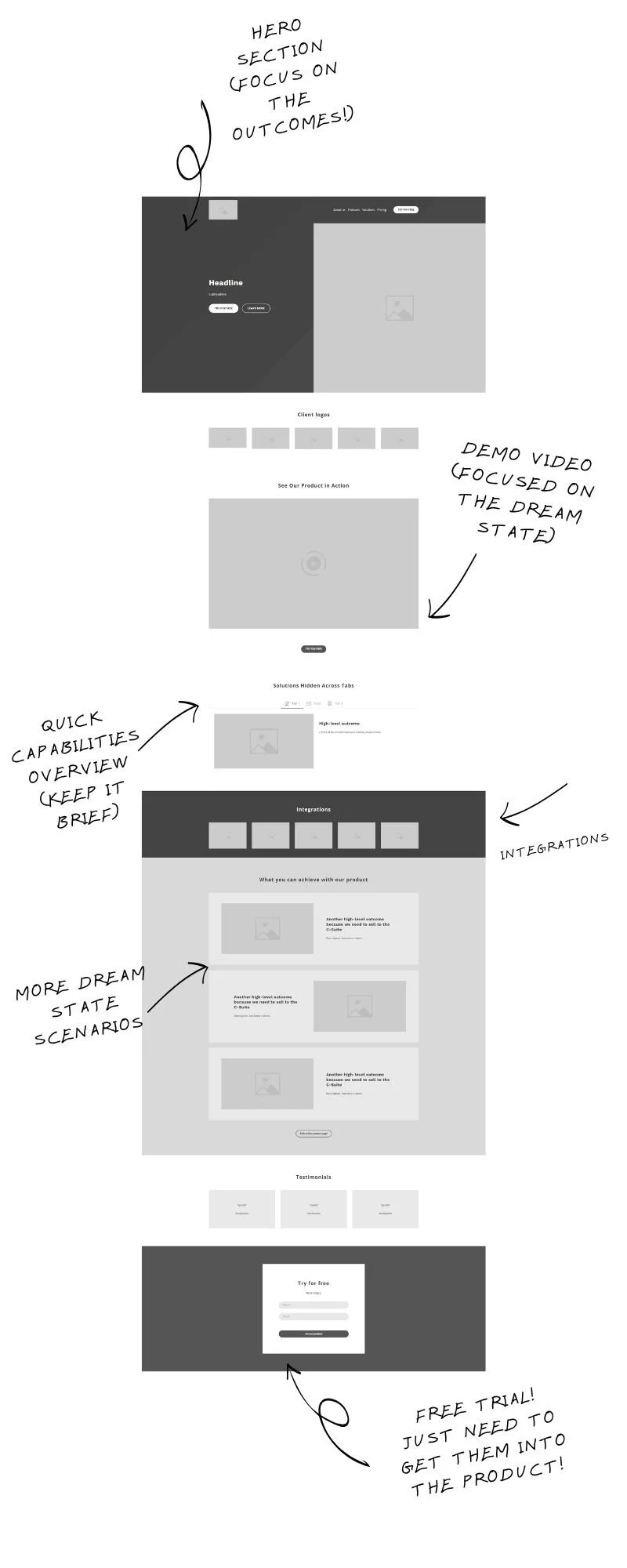
What we think prospects need to see… because best practices
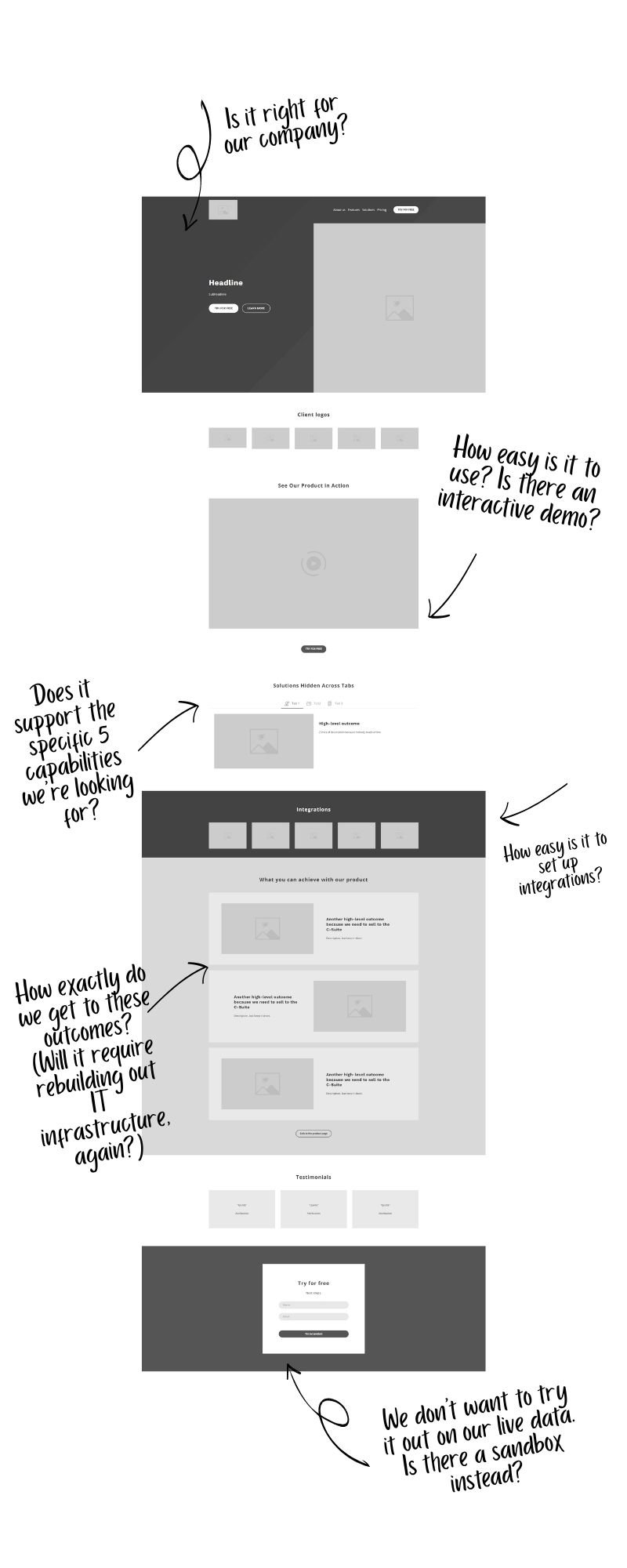
Questions that we fail to answer when we follow that template
How CRO (and PLG) best practices make you optimize for the wrong thing
PLG and SLG are different motions. Even putting aside the fiction of funnels, PLG and SLG still have wildly different buyer journeys.
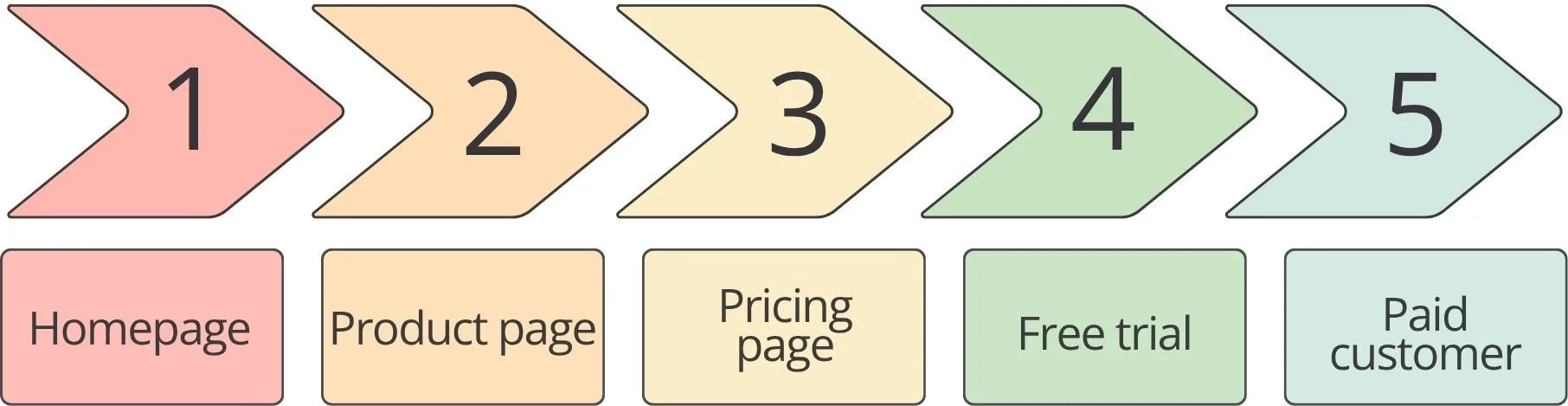
PLG website funnel (sort of)

SLG journey to purchase that includes the website, G2, Reddit, communities, AI and possibly other sources to de-risk the decision.
So websites for complex products aren’t really going fit the website mold for products that can be purchased without getting sign-offs or going through a POC phase (even though common best practices suggest that they should)?
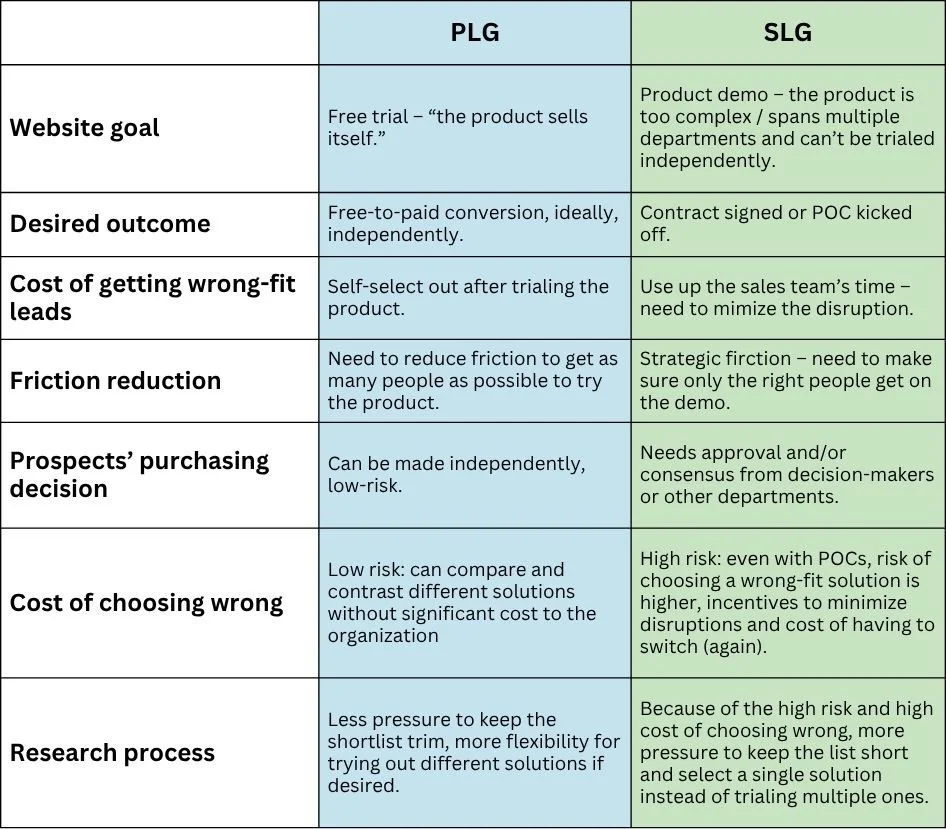
The risk of choosing wrong when comparing simple, low-cost tools is much lower compared to complex solutions that impact the whole company and the business bottom line.
PLG website templates (and connected best practices) break your sales
In the past, having a website that doesn’t provide all of the info that prospects would have liked to see wasn’t that much of an issue.
Now that spending patterns have changed, champions need more than claims about high ROI or ease of use to making adding one more product to the shortlist defensible — and to justify moving to the next step.
For incumbents, there’s less pressure to include that information font and center.
But if you’re not the default solution for your category, you may need to break the “standard B2B SaaS website” template, so you can make a case for moving forward with a demo.
Here are some examples from my past projects of factors that mattered to prospects:
Ability to evaluate solutions in a sandbox environment
Future product direction and roadmap information
Proof of fit for industry-specific requirements
What exactly matters — and how to frame the argument in favor of your product — will depend on your target audience and the way they think about their problem, available solutions, and tradeoffs between different options.
Good news: the bar for B2B SaaS websites is (still) pretty low.
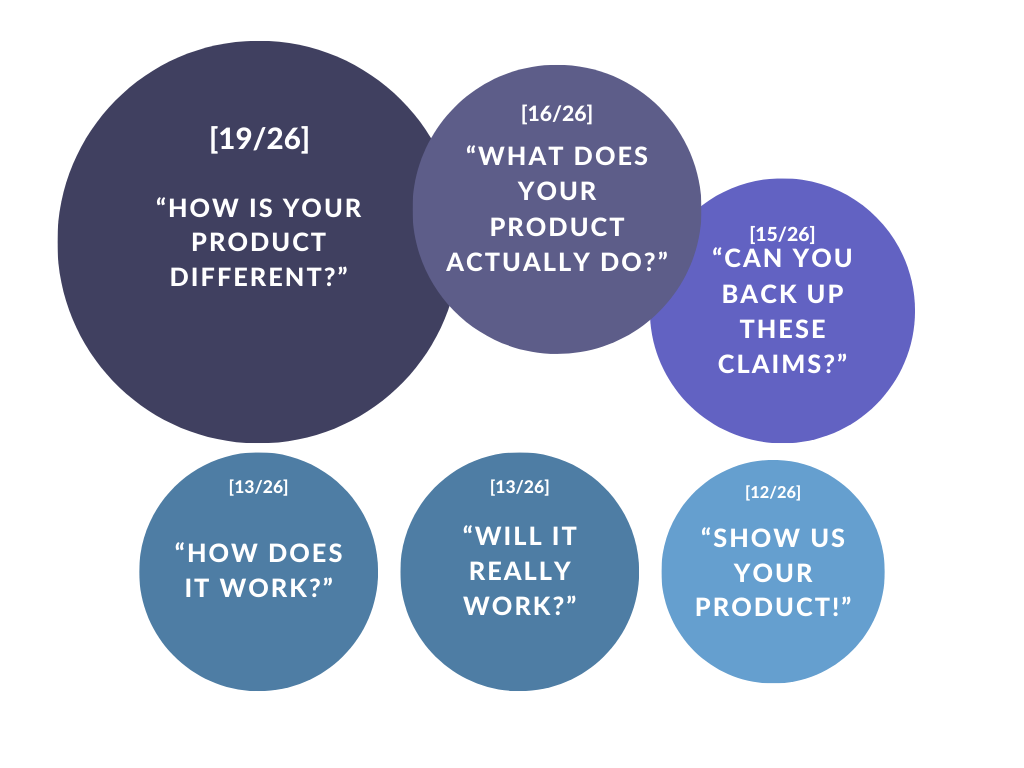
Wynter’s Do You Even Resonate? series shows that “How is your product different?” and even “So… what does it actually do?” are questions left unanswered on a shocking number of B2B SaaS homepages.
Working backwards from the most immediate to the less obvious factors influencing prospects:
Product info: does it do the JTBD we need it to do?
Solution in the context of the industry: how is it different — and would it work better for us than competitors?
Trustworthiness: can we trust the claims?
Market alignment: will it help us address industry challenges and align with our future goals?
Reputation: do companies like ours say good things about this solution?
Perceived sales process pain: am I going to hate my life if I schedule a demo?
Perceived internal championship pain: is it going to be hard to convince stakeholders or decision-makers that this solution is worth considering?
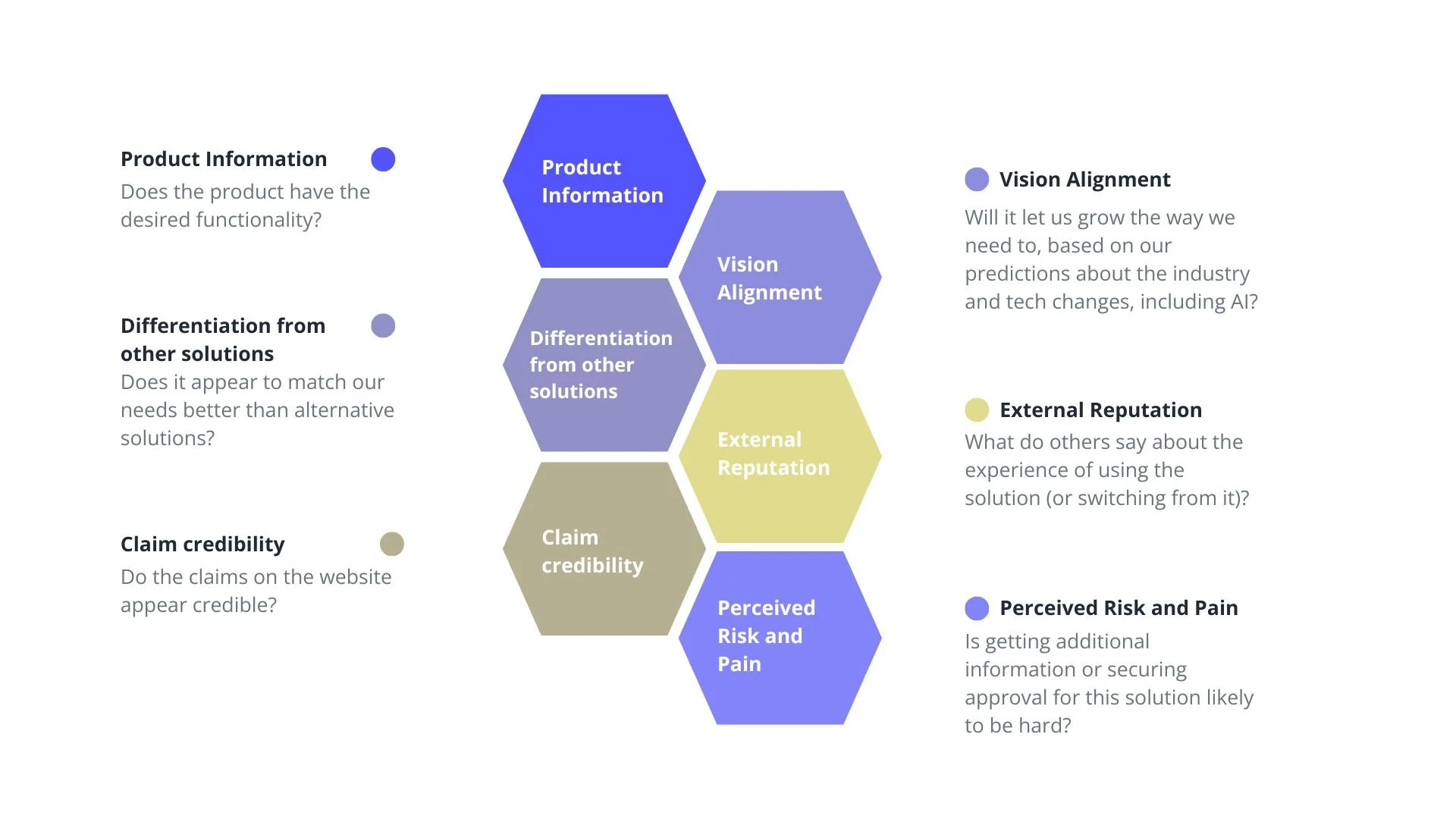
Most B2B SaaS startups and scaleups stop at product information. And miss out on addressing other questions prospects have.
Not all of those factors will be equally relevant, but all of the questions can be — and should be — addressed in throughout the website – so that you’re building a recognizable narrative that fits into your sales team’s demo.
Bad news: sometimes, not always, the reason for website underperformance isn’t an execution gap, it’s a foundational gap. More on that below.
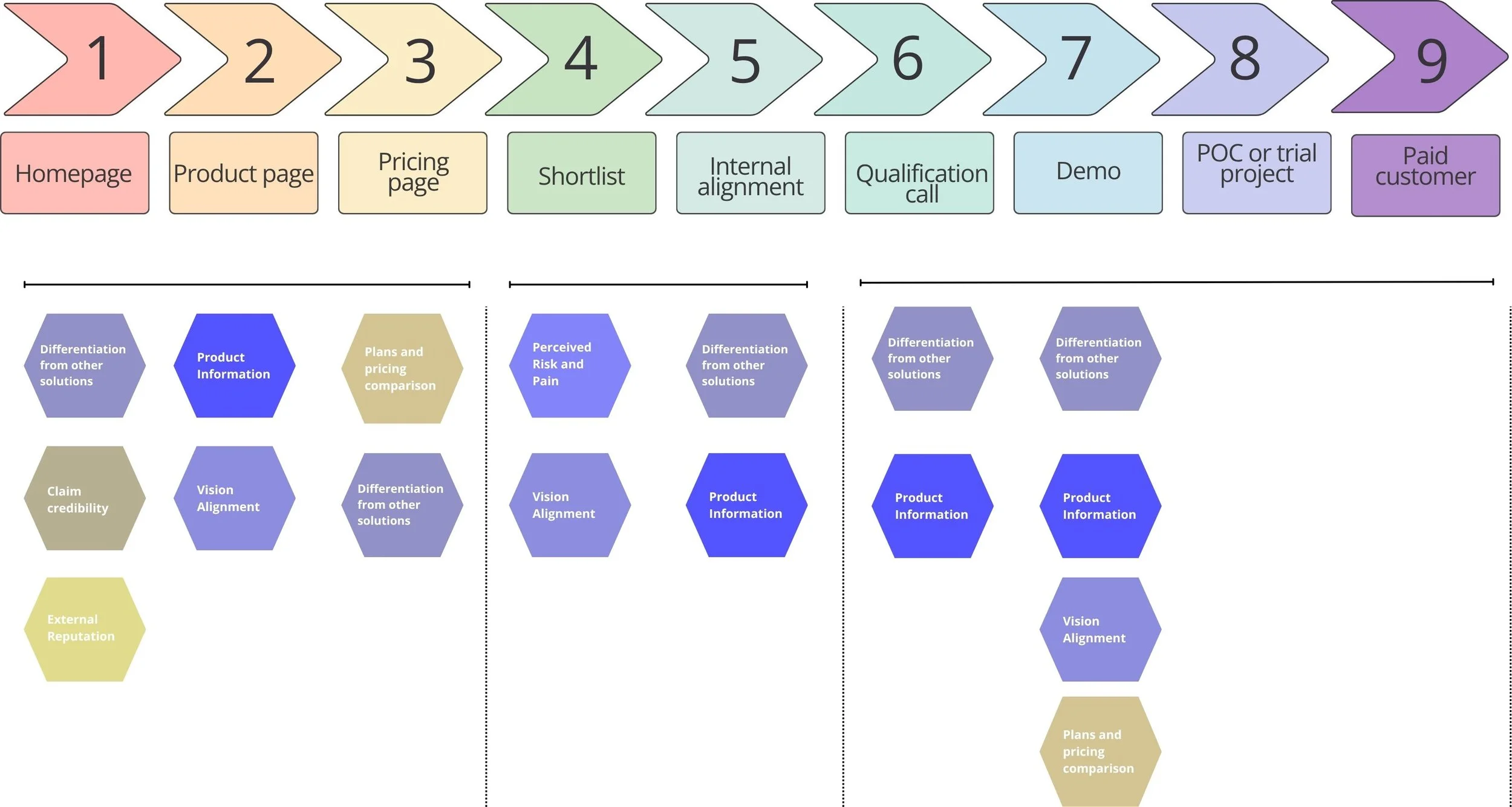
Even in a hypothetical, streamlined scenario the answer is “It’s complicated.”
Building a website that pre-sells on your product: what gets in the way
In my projects and conversations with B2B SaaS marketers, I see 3 factors getting in the way of building websites that get products on the shortlist:
Copy built out on best practices or assumptions about what a B2B SaaS website “should” look like.
Copy written and updated without building foundational layers for positioning → messaging → differentiation.
Positioning, messaging, differentiation and copy built out based on assumptions about the target audience (sometimes even on predictions about what that audience will look like in the future).
The answer to solving for all of them is understanding how your best-fit customers actually shop for solutions, select them for the shortlist, and how they make decisions about which one to go with (including de-risking their decision and managing stakeholders’ requests).
Understanding that helps make website structure and design decisions that are right for your audience and pre-sell them on your solution, instead of putting you in the “and every other solution that might work out, but then again, might not” bucket.
That doesn’t come down to just headlines or CTA copy — it also influences the way you design your website structure and how you present product features or product capabilities.
A checklist to find gaps that prevent you from getting on the shortlist
Going through sales conversations and closed-lost / closed-won interviews can you give some ideas of what attracts prospects and what makes them choose competitors.
Setting up additional feedback loops or running interviews with ideal prospects not currently considering your solution can help fill in the remaining gaps.
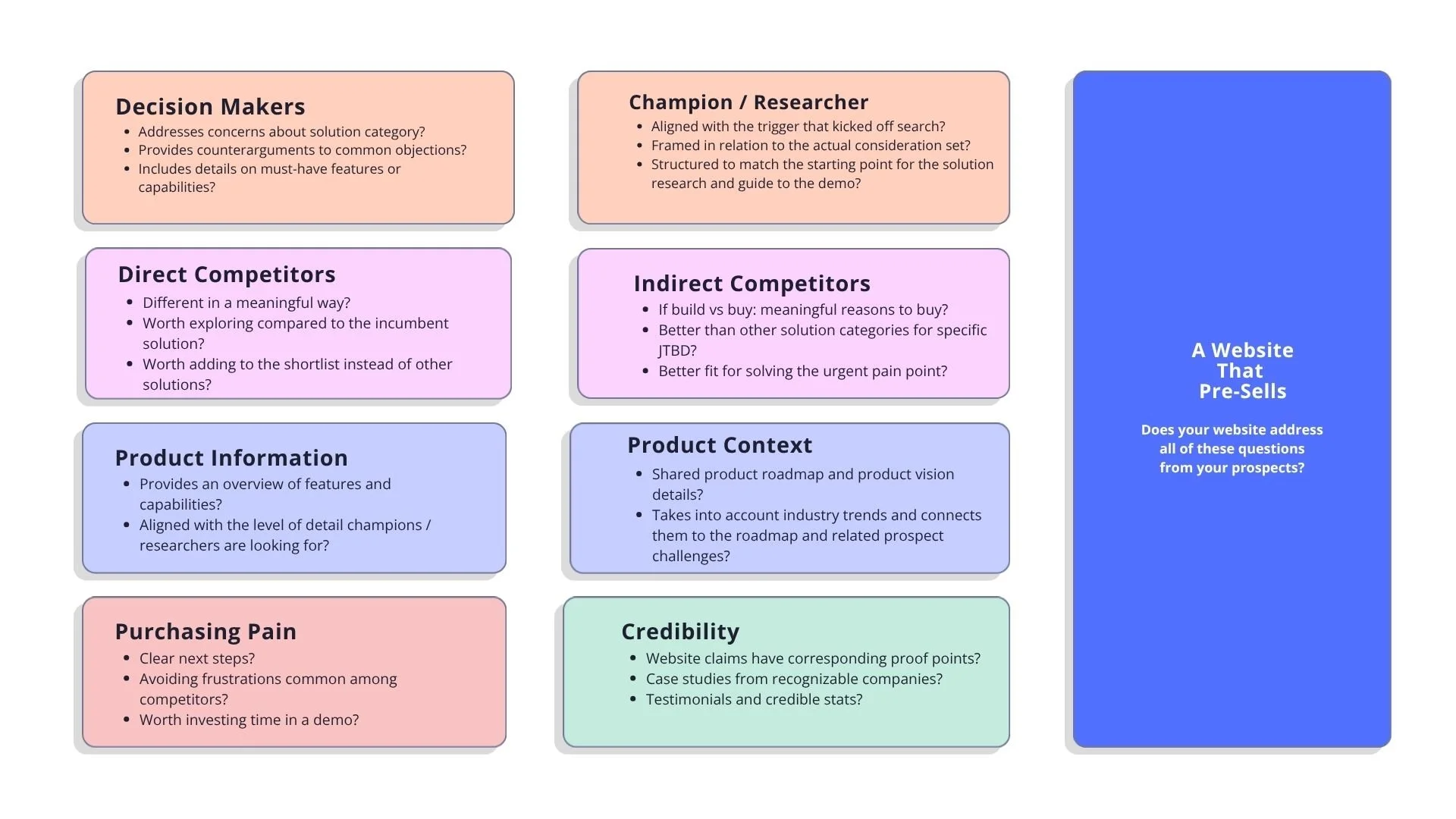
Not all of those factors may be equally relevant, but all of them contribute to building a website that brings in prospects
As a starting point, you could try going through this self-assessment to guide you.
[1] Product Information
Website provides an overview of features and capabilities
Copy aligned with the level of detail champions / researchers are looking for
[2] Product Context
Product roadmap and product vision details available
Narrative takes into account industry trends and connects them to the roadmap and related prospect challenges
[3] Framing Against Competitors
Direct Competitors
Show how the product is different in a meaningful way
Copy provides reasons to explore — compared to the incumbent solution(s)
Copy shows differentiators — compared to other competitors
Competing Solutions
If build vs buy is relevant: lists meaningful reasons to buy
Copy shows that product is better than other solution categories for relevant JTBD
Copy shows that product is a better fit for solving prospects’ urgent pain point
[4] Credibility Markers
Website claims have corresponding proof points
Website includes case studies from recognizable companies
Website includes testimonials and credible stats
[5] Writing for your Target Audience
Decision Makers:
Copy addresses concerns about solution category
Copy provides counterarguments to common objections
Copy includes details on must-have features or capabilities
Champions / Researchers:
Copy aligned with the trigger that kicked off search?
Copy framed in relation to the actual consideration set?
Copy structured to match the starting point for the solution research
[6] Reducing Purchasing Pain
Clear next steps and reason to get on a demo
Demo setup reduces friction compared to competitors
Prospects have enough information to make an initial decision even if they don’t sign up for a demo (“aha” moment front-loaded instead of saved for the demo)
5 steps to re-building your website to make it easy to choose your product (and advocate for it)
For the purposes of this framework, I’m going to assume that you already have messaging, positioning, and brand narrative figured out and are happy with those foundational assets.
If that’s not the case, the next step is reviewing those before updating the website. Same if you’re going through some pricing or packaging changes.
If your foundations are in place, you can can check how well your website is serving your prospects by going through these 5 steps:
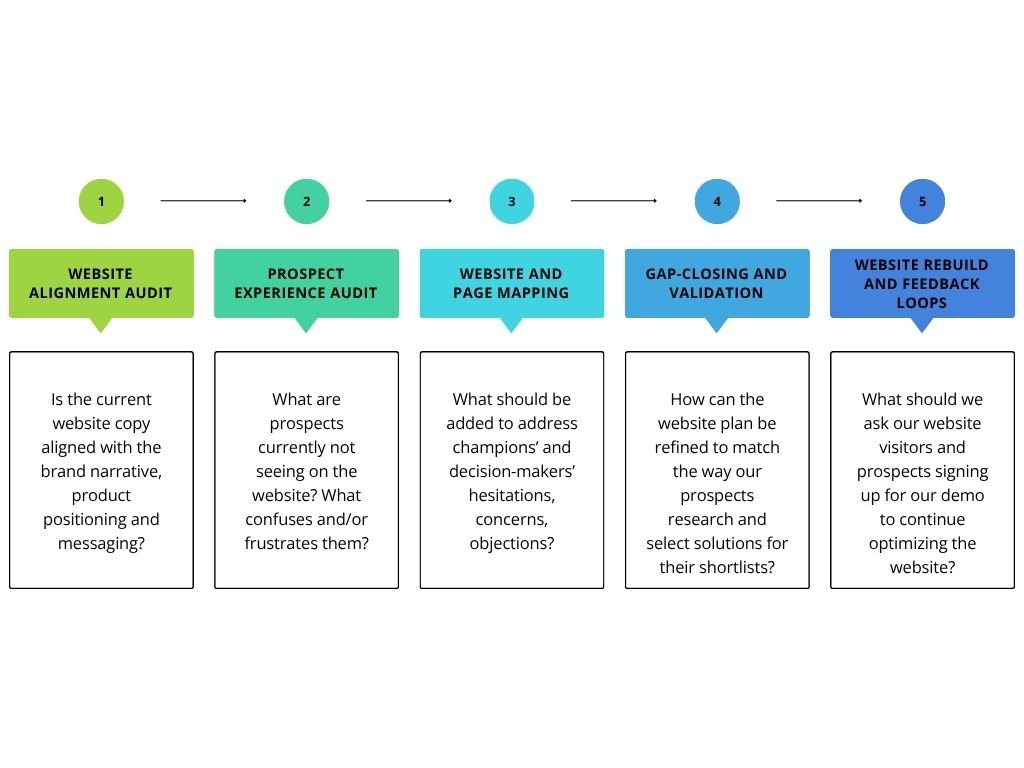
Website rebuild process to get your product on the shortlist and make it easier for champions to advocate for it.
Here’s the breakdown for each step:
Website alignment audit
Compare the words on the page, from headlines and subheadlines to microcopy, to your messaging deck, your positioning statement, and your brand narrative — are those themes recognizable in the web copy?
Your copy may read great, and check all the boxes for copywriting best practices — and, worst-case scenario, still be easily confused with the copy from your competitors’ website. This step helps make sure that you’re not rolling out copy that sounds good, but doesn’t align with what you want prospects to understand about your product.Prospect experience audit
Use session recordings and conversations with your sales team to figure out what might be missing, confusing, frustrating, or misaligned with what prospects are looking for. (Use this list of questions to start mapping out gaps.)
In one of my projects, this helped identify frequent frustrations about the sales process and a strong preference for self-guided product exploration. Especially with competitors intent on pushing every lead through the demo funnel, this was an opportunity to stand out and build credibility with a skeptical audience.Website structure and section elements mapping
At this point, you should start seeing some gaps between what your website is currently delivering and what if could be doing.
Break down the website structure elements that aren’t serving your audience, such as confusing demo signup headlines, confusing contact pages, or convoluted flows from pricing to demo signup.
Map out the information that’s missing, for example:supporting information to reassure the buying committee
features that get “aha!” but aren’t explicitly called out on the website, or
missing pages, like use cases or industry-specific pages.
Gathering this information doesn’t mean switching direction and writing for the C-Suite — unless they truly are the ones researching available solutions. Instead, it’s about understanding the constraints that your champions face and helping them build an argument in favor of adding your product to the shortlist.
Ideally, you also already have — or plan to have — case studies that can support concerns around implementation and ROI.Hypothesis validation and additional research
Even though your sales team knows a lot, they’re not going to be able to fill in all of the gaps — for example, prospects may not be willing to share their competitor consideration set, reasons to research solutions now, or reasons why they didn’t move forward with your solution.
Here are some options for filling out those gaps:Closed-lost analysis results
Interviews with non-customer ICPs
Closed-won interviews to understand ideal buyer journey
In one past project, this phase helped explain low levels of website engagement and re-design the website structure to match champions’ approach to researching solutions.Website rebuild and feedback loops
Website optimization is never done — and ideally, you shouldn’t have to scramble to figure out the next step of optimization opportunities or make decisions based on guesswork.
For one of my clients, feedback loops helped clarify the segment breakdown for their target audience — which informed both the product pages and the content strategy to drive traffic to the website.


Ekaterina (Sam) Howard, conversion copywriter and strategist for B2B SaaS startups and scaleups
Hi, I’m Sam Howard, a conversion copywriter and strategist. I help B2B SaaS startups and scaleups build out funnel-critical pages that get them on their prospects’ shortlists — and make it easy for champions to defend them.
What if your website both answered pre-qualifying questions that your prospects research when they build their shortlists — and helped you build a strong case for choosing your product?
For sales-led B2B SaaS, the starting point is making sure that the website is actually with what their prospects are looking for — whether they’re relying on AI search or not.